Exclusive Distribution Rights in India for Waste Management – WTT, Netherlands
Exclusive Distribution Rights in India for Waste Management – WTT, Netherlands
Exclusive Distribution Rights in India for Waste Management – WTT, Netherlands
Exclusive Distribution Rights in India for Waste Management – WTT, Netherlands
Exclusive Distribution Rights in India for Waste Management – WTT, Netherlands
Exclusive Distribution Rights in India for Waste Management – WTT, Netherlands
What we do
Turning Waste Into National Assets
Waste Reception
Municipal solid waste is delivered to the facility by the Nagpur Municipal Corporation for systematic processing.
Sorting & Segregation
Advanced mechanical systems separate organic waste, recyclable materials and other residuals for appropriate processing.
Recyclables Recovery
Recovering valuable recyclable materials from segregated waste and directing them towards appropriate recycling streams.
Dry Fermentation Technology
Using dry anaerobic digestion technology to convert suitable organic waste into biogas.
Compressed Biogas (CBG)
Purifying biogas to support the production of compressed biogas as a renewable energy resource.
Composting & Resource Recovery
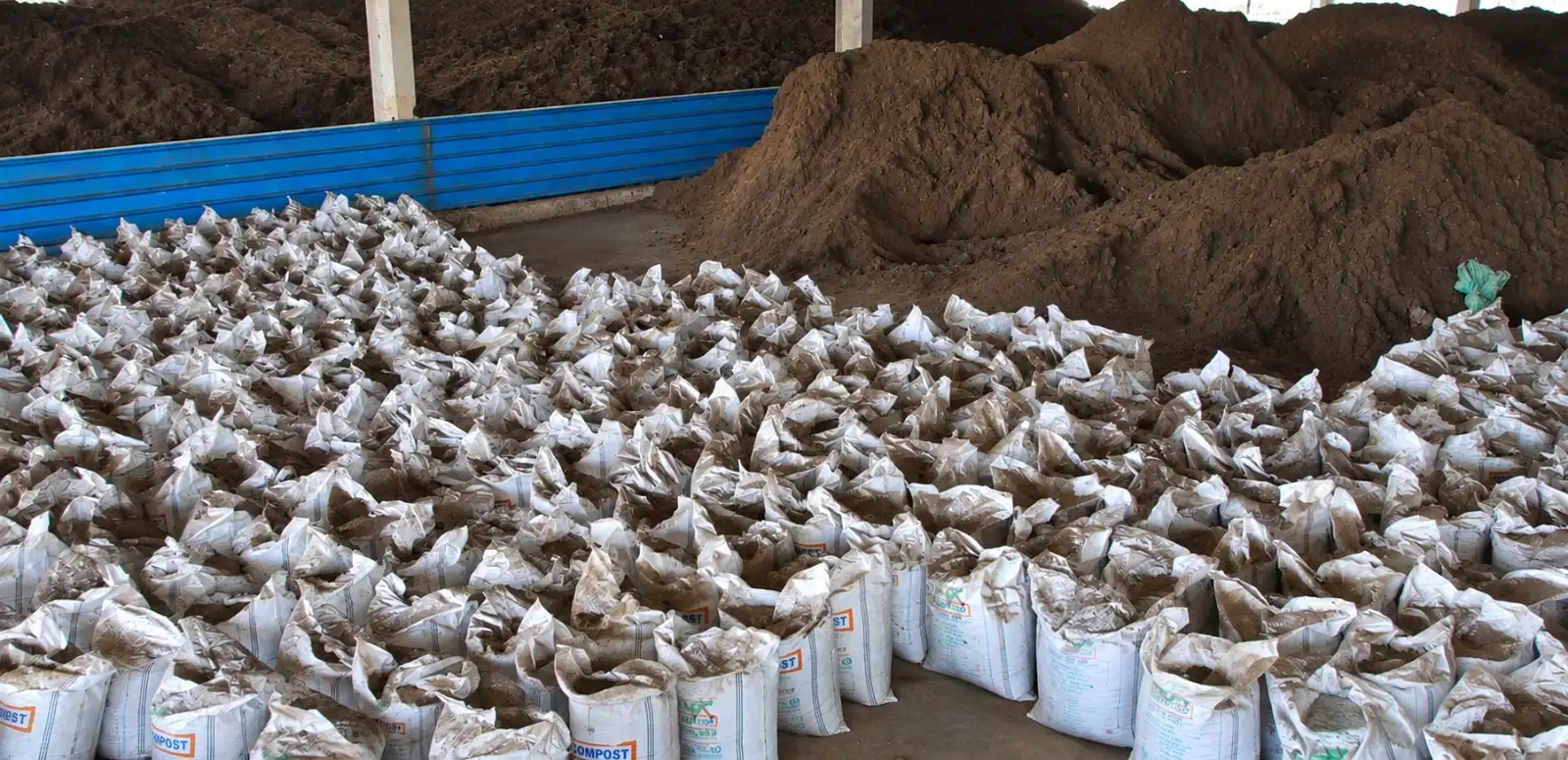
Processed organic matter is converted into valuable organic compost (FOM), supporting resource recovery and sustainable waste management.
Less Landfill • Clean Energy • Compost & Recyclables • Circular Economy • Less Landfill • Clean Energy • Compost & Recyclables • Circular Economy • Less Landfill • Clean Energy • Compost & Recyclables • Circular Economy • Less Landfill • Clean Energy • Compost & Recyclables • Circular Economy •
Less Landfill • Clean Energy • Compost & Recyclables • Circular Economy • Less Landfill • Clean Energy • Compost & Recyclables • Circular Economy • Less Landfill • Clean Energy • Compost & Recyclables • Circular Economy • Less Landfill • Clean Energy • Compost & Recyclables • Circular Economy •
Nagpur Plant Walkthrough
Proven Technology, Working for Indian Cities
Our dry fermentation process, proven in the Netherlands, now turns municipal waste into Compressed Bio-Gas and compost at Nagpur.
Nagpur Plant Spotlight
A City-Scale Waste-to-Energy Project in Nagpur.
The Nagpur project demonstrates Keva Green’s approach to developing municipal waste treatment infrastructure that combines dry fermentation, biogas upgrading and resource recovery.
Keva Green focuses on transforming organic waste into valuable resources through waste-to-energy solutions, dry fermentation technology, and compressed biogas production. By recovering value from waste, we aim to support more sustainable and responsible waste management practices.
160+ Projects Installed Worldwide By WTT, Proven For 20+ Years In Europe
Step 01
Arrival & Sorting
Step 02
Make Biogas
Step 03
Clean The Gas
Step 04
Fuel & Compost
What We Recover
Three Outputs. One Smarter Approach.
Keva Green’s integrated approach turns municipal solid waste into three useful outputs: renewable fuel, organic compost and recovered materials.
Compressed Biogas
Biogas generated from organic waste is upgraded into compressed biogas (CBG), a clean fuel for vehicles and industry that can be supplied to city gas and oil companies.
Organic Compost
The stable, low-odour residue from dry digestion is processed into organic compost, a fertilizer for agriculture.
Recyclables Materials
Recyclables such as plastics and metals, and refuse-derived fuel (RDF) for cement plants, are separated during processing and returned to the economy. Inert material is handled separately.
Partner With Us
Ready To Turn Your City’s Waste Into Energy?
Talk to our team about bringing dry fermentation technology to your city. We work with municipalities, state governments and gas distribution partners to build, operate and maintain waste-to-energy plants under a PPP model.
Our plants process mixed municipal solid waste. Recyclables, RDF and inert material are removed first, and the organic fraction goes into digestion.
What Do Your Plants Produce?
Three outputs: compressed bio-gas as clean vehicle and industrial fuel, organic compost for agriculture, and RDF for cement plants or conversion to methanol.
What Is Dry Fermentation, And How Is It Different From Wet Fermentation?
Compared with wet fermentation, dry fermentation uses less electricity and water, is modular and scalable, and handles a wider range of feedstock. It also carries a lower risk of process failure and has no odour emissions. It leaves a stable residue that goes straight to saleable compost.
Where Are Your Plants Located?
Our reference plant is in Nagpur, Maharashtra, and a second plant is planned in Kanpur, Uttar Pradesh.
Still Have A Question?
Our team is happy to help. Reach out to us anytime.